
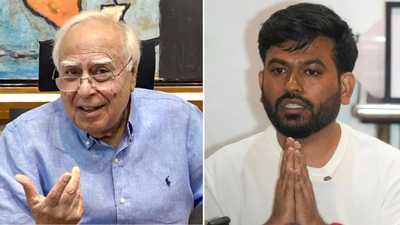
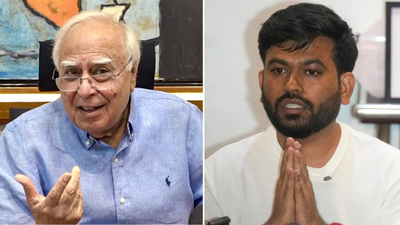
NEW DELHI: Cockroach Janta Party (CJP) on Monday endorsed senior advocate and Rajya Sabha member Kapil Sibal’s proposal to bar MPs and MLAs who defect from their political parties from holding public office. CJP founder Abhijeet Dipke described the proposal as the “need of the hour”.Sibal, speaking at a talk titled ‘Horse Trade and Democracy’ in Kerala’s Kochi, called for amendments to the Tenth Schedule of the Constitution to prevent party mergers from becoming “loopholes for mass walkouts”.Under the existing law, legislators who defect are protected from disqualification if at least two-thirds of the members of their legislative party cross over to another party, with the move being treated as a merger.Sibal called for changes to the Tenth Schedule to close this “loophole” and ensure that “a merger is a merger of political parties and not a collective walkout by legislators”.CJP co-convener Saurav Das backed Sibal’s proposal, saying it was in line with the forum’s first demand charter.“Senior Advocate Kapil Sibal’s proposal to ban any MP and MLA who gets elected on Party X’s symbol and later defects to Party Y for money or under pressure should be welcomed. He calls for a 10-year ban,” he said.Das said point 5 of CJP’s first demand charter, released by Dipke, proposed an even stricter provision: barring defectors from holding any public office or contesting elections for 20 years.“Breaking political parties, bribing MPs with 50-100 crore, toppling governments is a fraud committed on the country. Such fraud should never happen. The Anti-Defection law is outdated. The ruling party has ensured its misuse in its lust for eternal power. The young will change this,” he said.Dipke reiterated the demand, calling it the “need of the hour”. In a post on X, he said, “Any elected representative who switches parties after being elected should be barred from holding public office.”The call for changes to the anti-defection law comes amid the ongoing political developments within the Trinamool Congress in the Lok Sabha and West Bengal Assembly.In the Lok Sabha, 20 of the TMC’s 28 MPs have announced that they are leaving the party to form a separate Nationalist Citizens Party of India (NCPI), while extending support to the BJP-led NDA.The move has brought renewed attention to the anti-defection law and its two-thirds merger provision.In West Bengal, the faction led by Ritabrata Banerjee has sought recognition as the TMC and staked claim to the party’s name, organisational control, assets and election symbol. The faction has also claimed the support of a majority of the party’s newly elected MLAs.The Election Commission has begun examining the competing claims of the Ritabrata and Mamata Banerjee factions.The developments have focused attention on the Tenth Schedule provision that protects legislators from disqualification when two-thirds of a legislature party is deemed to have merged with another political party.
Share your thoughts in the comments
Be respectful · TOI community guidelines
The TMC developments come after seven Aam Aadmi Party Rajya Sabha members joined the BJP earlier this year, with the group also invoking the two-thirds merger provision.The issue has also featured prominently in earlier splits involving the Shiv Sena and the Nationalist Congress Party in Maharashtra.In 2022, Eknath Shinde led a majority of Shiv Sena MLAs away from Uddhav Thackeray, triggering a change of government. In 2023, Ajit Pawar split the NCP and joined the BJP-led government along with a group of party legislators.






Leave a Reply