
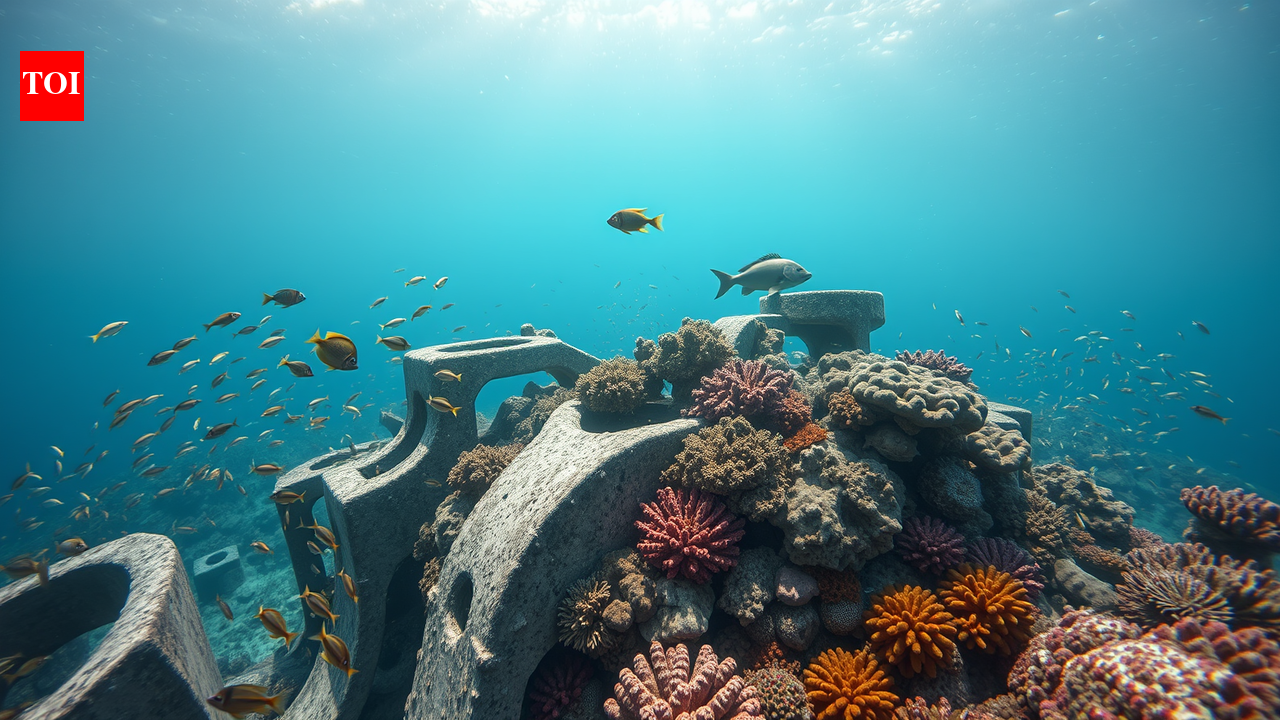
North Carolina has given two existing artificial reefs off the Outer Banks another 3,000 tons of material, using damaged and unusable concrete pipe and boxes that would otherwise have required disposal. The N.C. Artificial Reef Program completed the two enhancement projects in May 2026, placing approximately 1,500 tons of recycled concrete at each site. The reefs, designated AR-230 and AR-250, lie offshore of Cape Hatteras and Ocracoke, respectively. According to the North Carolina Department of Environmental Quality (DEQ), the material now sits on the seafloor, adding new structure for marine life while improving opportunities for recreational fishing and diving. The concrete was donated by businesses and the North Carolina Department of Transportation, which had material that was damaged and no longer usable for its original purpose. The project was part of a year-long process involving public comment, planning, permitting and stockpiling before the material could be deployed.
The concrete was added to two established reefs
AR-230, also known as the Mr. J.C. Reef, is approximately 6 miles from Hatteras Inlet in about 70 feet of water. The site already contains several large structures, including the 105-foot tug Mr. J.C., which was sunk there in 1987, as well as a 75-foot landing craft and 130-foot freighter added in 1991. The latest project placed the new concrete material in a dense field around the existing reef.AR-250 lies approximately 10 miles from Ocracoke Inlet in about 80 feet of water. Its earlier materials include concrete rubble deployed between 1990 and 1992, a bridge frame added in 2001 and concrete boxes placed between 2005 and 2006. The new 1,500-ton addition further increases the amount of hard structure available at the site. The use of existing reef sites means the project was an enhancement rather than the creation of two entirely new artificial reefs. North Carolina’s Artificial Reef Program has been creating and expanding reef sites since the 1970s, using materials including concrete, vessels and other suitable structures.
Damaged concrete gets another use underwater
The material used for the latest projects came from across North Carolina. DEQ said businesses and the N.C. Department of Transportation donated concrete pipe and boxes that had been damaged and were unusable for their intended purposes. Instead of being discarded, the material was transported, stockpiled and eventually deployed on the two offshore reefs.Once on the seafloor, concrete provides hard surfaces and three-dimensional structure in areas where naturally occurring rocky habitat is limited. The Artificial Reef Program says its reef materials are strategically located to maximise access for anglers and divers while also serving biological and ecological purposes. The programme describes the reefs as habitat for marine organisms as well as destinations for recreational users. The two sites are already popular with anglers. DEQ says fishermen visiting both reefs can expect to catch triggerfish, black sea bass and other bottom-dwelling fish, while divers often report underwater visibility of more than 50 feet.
Fish can begin using new structures quickly
Marine life can colonise artificial reef structures surprisingly quickly, although the timing and species involved vary from site to site. In 2022, Artificial Reef Program coordinator Jordan Byrum recalled seeing fish around a tugboat near Pine Knoll Shores only 30 to 45 minutes after it was sunk. Byrum was on a dive at the time and said fish had already gathered around the vessel. That observation involved a different reef and was not a measurement of how quickly fish colonised the new material at AR-230 or AR-250. The broader objective of the programme is to build increasingly complex reef structures that can provide shelter and feeding areas for marine organisms while supporting recreational fishing and diving. North Carolina has repeatedly used donated and recycled materials for this purpose, including large quantities of concrete from transportation projects.
North Carolina maintains dozens of artificial reefs
The latest additions are part of a much larger statewide programme. The Artificial Reef Program, operated by the N.C. Division of Marine Fisheries within the Department of Environmental Quality, currently maintains 43 ocean artificial reefs and 29 estuarine reefs. Reef locations and enhancement materials are selected based on factors including public input, available materials, existing structures and the potential to increase habitat complexity.The state has previously undertaken much larger reef projects. In 2022, for example, material from the old Oregon Inlet bridge was distributed among eight artificial reefs, with approximately 80,000 tons of concrete deployed in total. That project was described by DEQ as the largest amount of material associated with an artificial reef project in the programme’s history. The 2026 work at AR-230 and AR-250 is considerably smaller, but it follows the same principle: material that can no longer serve its original purpose can instead become part of a permanent underwater structure. At the two Outer Banks sites, the latest 3,000 tons of recycled concrete now form additional reef habitat on the seafloor.






Leave a Reply