
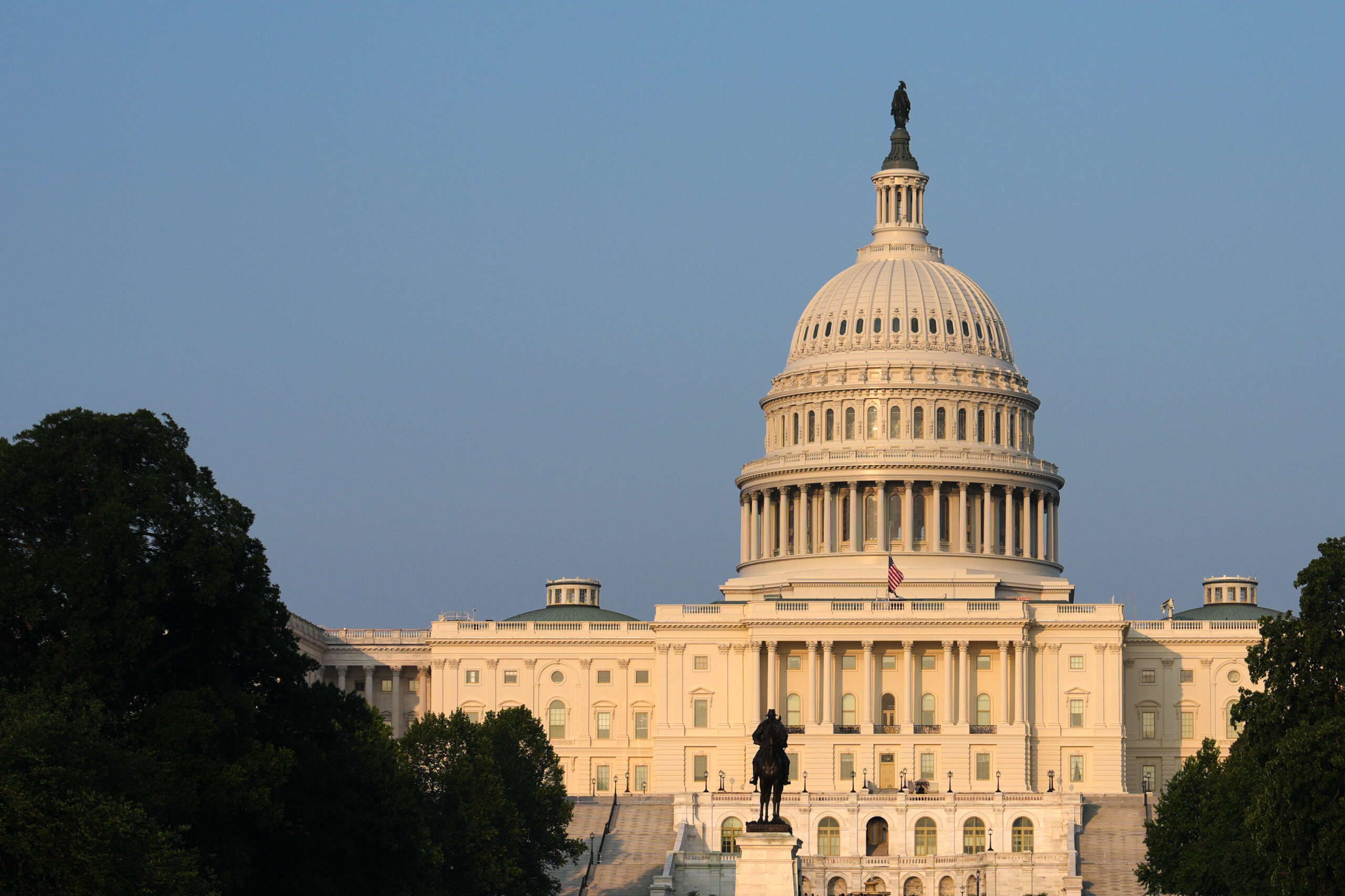

The House passed a government funding bill Tuesday night that would extend funding for all federal operations through the midterm elections — a move made months ahead of the Sept. 30 deadline to avoid a shutdown.
The 220-205 vote was largely along party lines, with Speaker Mike Johnson managing to keep his extremely narrow majority mostly together to advance legislation that would fund the government through Dec. 4.
Top House Republicans hope moving the funding measure so early in the process will put Democrats on defense in the impending government spending fight, before voters head to the polls this fall. Republicans plan to highlight Democrats’ votes against federal funding in the midterm campaigns.
The bill also does not include unrelated policy provisions, a key selling point for GOP leaders who argue there’s no reason Democrats should oppose a “clean” product. The measure does include traditional payments to the families of lawmakers who have died while serving in Congress, including late-Sen. Lindsey Graham (R-S.C.) and late-Rep. David Scott (D-Ga.), which is not politically controversial.
“They’re happy to play shutdown politics. We’re not,” House Appropriations Chair Tom Cole of Oklahoma said Tuesday, contrasting his Republican Party with the Democrats. “We think it’s a mistake, and so we’re moving on it early, expeditiously, and trying to create some momentum where we’re not waiting to the last minute.”
But Democrats are irate that Republicans plowed ahead with a bill that had no input from their side of the aisle. The funding patch also lacks language to ensure new dollars don’t go to Border Patrol or Immigration and Customs Enforcement after Republicans already enacted $70 billion for those agencies along party lines this year.
Rep. Rosa DeLauro of Connecticut, the top Democratic appropriator in the House, said Democrats have drawn “a clear line in the sand” against “giving the Trump administration permission to use billions provided by this bill to fund Border Patrol without any substantial reforms to how that agency operates.”
Democrats have for months been demanding overhauls to how federal immigration enforcement officers operate in the field — a stance that led Republicans forging ahead with a party-line reconciliation bill in June that will fund ICE and Border Patrol activities until the end of the Trump administration.
Minority Leader Hakeem Jeffries of New York expressed strong opposition to the GOP stopgap in a closed-door caucus meeting ahead of the vote, and other key senior House Democrats urged their colleagues to oppose the spending measure.
The bill now heads to the Senate, where top appropriators are already discussing a different government funding approach: moving a stopgap with “anomalies” to prevent disruptions to key services that would otherwise result from flat funding.
The White House sent a list of these special exceptions Monday, but they are not included in the House’s measure.
Senate Majority Leader John Thune on Tuesday laid out his plans to put a short-term stopgap funding bill on the chamber floor before the August recess incorporating anomalies — while also threatening to pursue another party-line bill to fund the whole government if Democrats don’t get on board with a compromise.
“I hope that’s not necessary,” Thune said.
Jordain Carney and Mia McCarthy contributed to this report.





Leave a Reply